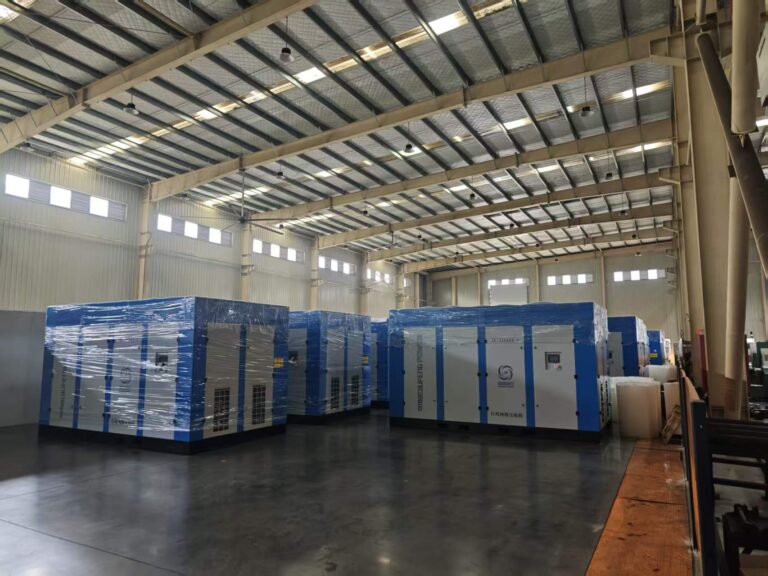
In daily maintenance of screw air compressors, the split-type air-oil separator tank is the mainstream structure for industrial machines, permanent magnet variable frequency units and two-stage compressors. Its biggest advantage is that the tank shell can be reused while only the internal oil separator element needs replacement, delivering lower maintenance costs and higher flexibility.
Many factory maintenance personnel hold a fluke mentality: as long as the compressor still produces air without alarms, the oil separator element does not need replacing. In fact, the oil separator element is a mandatory regular consumable. Even seemingly normally running units may suffer rising pressure differential, hidden oil carryover, soaring power consumption and contamination of downstream equipment.
Working Principle of Split-Type Air-Oil Separator Tank
1. The split separator consists of a reusable metal tank body and a separately replaceable oil separator element.
2.Compressed air discharged from the air end enters the separator tank. After high-precision fiber filtration by the separator element, lubricating oil is intercepted and refluxed, and clean compressed air with oil content ≤3ppm is delivered finally.
3. The tank is a pressure vessel that can serve for a long time under normal operating conditions. The separator element is the only wearing part; all blockage, aging and oil leakage issues occur on this filter element.
Four Severe Consequences of Delayed Replacement
1.Filter Blockage & Sharp Rise in Pressure Differential
Long-term adsorption of dust, oil sludge and carbon deposits clogs the filter pores, leading to a continuous rise in pressure differential between inlet and outlet. The compressor is forced to operate under higher load, resulting in substantial power waste.
2.Sharp Decline in Filtration Precision
Aged and blocked elements lose filtration capacity, failing to fully intercept and recover lubricating oil. Oil will flow into downstream pipelines along with compressed air, causing oily and impure finished air.
3.Poor Oil Return Accelerates Air End Wear
Blocked elements create abnormal internal pressure inside the tank, slowing and incomplete oil return. Insufficient oil supply to the air end leads to inadequate lubrication, accelerating wear of rotors and bearings during long-term operation.
4.Sudden Unplanned Shutdown
Aged brittle separator fibers may be ruptured by high-pressure airflow, causing massive sudden oil leakage and sharp pressure drop. This halts production lines, pollutes the whole oil circuit and incurs extremely high cleaning costs.
Standard Replacement Cycles for Split Oil Separator Elements
Based on an 8,000-hour full maintenance cycle for air compressors:
Clean normal-temperature workshops (standard working conditions): Replace every 2,000–3,000 hours
Dusty environments (woodworking, building materials): Replace every 1,000–1,500 hours
High-temperature, 24-hour continuous operation with inferior lubricant: Replace every 1,000–1,500 hours
Humid conditions with excessive condensate and emulsified oil: Replace within 1,500 hours
Mandatory judgment rule: Replace immediately once the separator pressure differential exceeds 0.8 bar, regardless of running hours.
Key Precautions for Replacing Split Oil Separator Elements
Never disassemble under pressure – safety first
Cut off power, release all pressure and cool down the unit after shutdown. Do not start disassembly until the pressure gauge reads zero and the unit cools to ambient temperature. Disassembly under high temperature and pressure easily causes oil ejection and scalding, a frequent safety hazard in workshops.
Fully drain waste oil and thoroughly clean the tank
After removing the separator tank, drain all residual waste oil and thoroughly scrape hardened oil sludge on the inner wall. Reusability of the tank relies on a clean interior; residual sludge will contaminate and clog the new element in a short time, rendering replacement useless.
Inspect oil return pipe and one-way valve (90% of oil carryover faults stem from these parts)
Simultaneously check whether the oil return pipe is bent, blocked or cracked, and whether the oil return one-way valve is stuck or failed. Faulty oil return systems are the top cause of oil carryover after installing a new separator element. Even brand-new genuine elements will produce excessive residual oil if oil return is obstructed.
Always use a new sealing ring; never reuse old gaskets
Reusing aged sealing rings is strictly prohibited. Long-term high-temperature exposure hardens and deforms old gaskets, losing sealing performance and causing tank cover air leakage, pressure drop and oil spillage. Fit a brand-new sealing ring with each new element, and thinly coat special compressor lubricant on the ring before installation to boost tightness.
The most cost-effective compressor maintenance is timely replacement of oil separator elements to avoid hidden faults, rather than repairing breakdowns after they occur. For split separator units, regular element replacement and standardized installation maintenance can minimize maintenance costs while keeping the compressor running with low energy consumption, low failure rate and stable clean air supply all year round.
If you encounter any technical doubts or after-sales demands regarding separator element or tank replacement, feel free to contact the Jufeng Team for support!